They Call It "Locker Room Talk." We Call It a System Built to Silence Us — and Bury the 28th Amendment.
March 13, 2026

Our twenty-four words
Twenty four words. Twenty four words introduced in 1923 by Alice Paul and co-written by Crystal Eastman. Twenty four words that were introduced in every legislative session until they were passed by Congress in March of 1972. Twenty four words reads the Equal Rights Amendment (ERA), beginning with Section 1: “Equality of rights under the law shall not be denied or abridged by the United States or any other state on the account of sex”. Twenty four words that are long overdue.
The ERA: just for women?
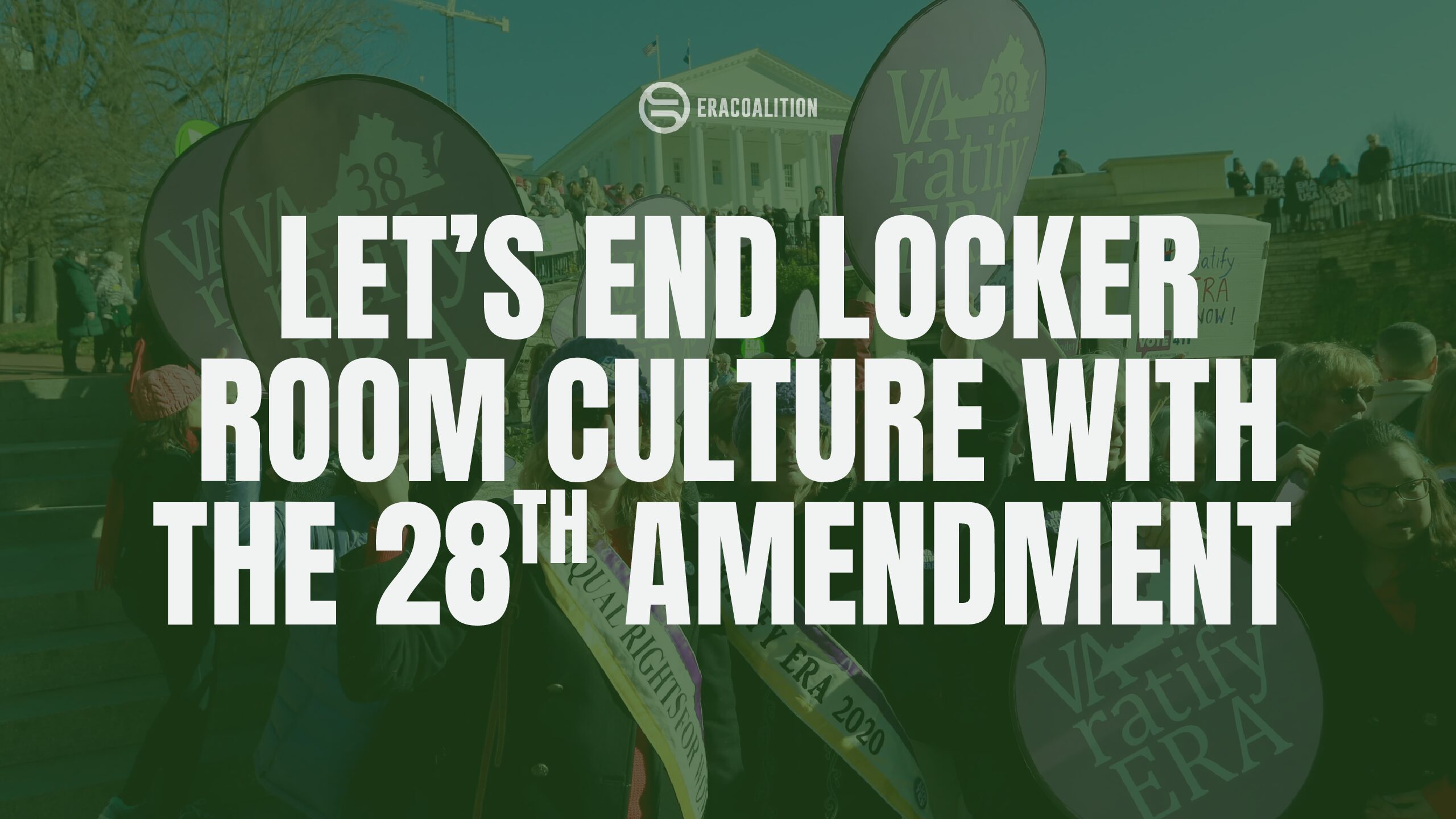
When we think about the ERA, what often comes to mind is the feminist movement and suffragists of the 19th century, with their sashes adorned as they shouted from soapboxes. The ERA, although it contains all of this history, can be seen from a different perspective. While introduced by Alice Paul, a suffragist advocating for equal rights that were originally only enjoyed by white women, the ERA Movement has evolved: we are loud, we are queer, but we are also racially and ethnically diverse, of different religions and even political affiliations. In order to expand and build cross-movement solidarity, we must identify this historic exclusion: 1970s women’s rights advocacy intentionally excluded queer voices and women of color. As these communities forced themselves into the conversation (See: Lavender Menace Movement, 1970), we built an intersectional movement in which people power can win.
So what?
When I entered the ERA Movement, I assumed it was like every other gender equality movement: focused solely on white feminism, women’s rights, and women’s bodies. Quickly, I learned this is not the case. While we recognize the historic fight of women and the crucial need for women's rights, not only women benefit from the ERA. Queer communities also benefit from the ERA, as its 24 words never specify women, simply equality cannot be denied on the account of sex, inclusive of gender.
In order to build a successful social movement, we must include everyone, understanding that our fight is inextricably connected with the fight for bodily autonomy, reproductive healthcare, Black maternal healthcare, and gender affirming care. When we fight together, we win.
Cited:
Lavender Menace Protests Homophobia in Women's Movement | EBSCO Research Starters
Sign Up for Our Newsletter!